AI-native GTM is go-to-market run as one routed motion inside a revenue engine: software that holds the company’s context, works inside its own CRM and channels, and is scored on every output before anything ships. SMOrchestra installs it in 12 weeks for $39,000, one time, and transfers ownership to the client’s team at the end.
AI-native GTM starts by choosing one motion
Most go-to-market effort is spread across motions nobody chose on evidence: some outbound, some content, a partner conversation, a paid test. Each gets a fraction of the attention it needs, and the pipeline reflects the fractions.
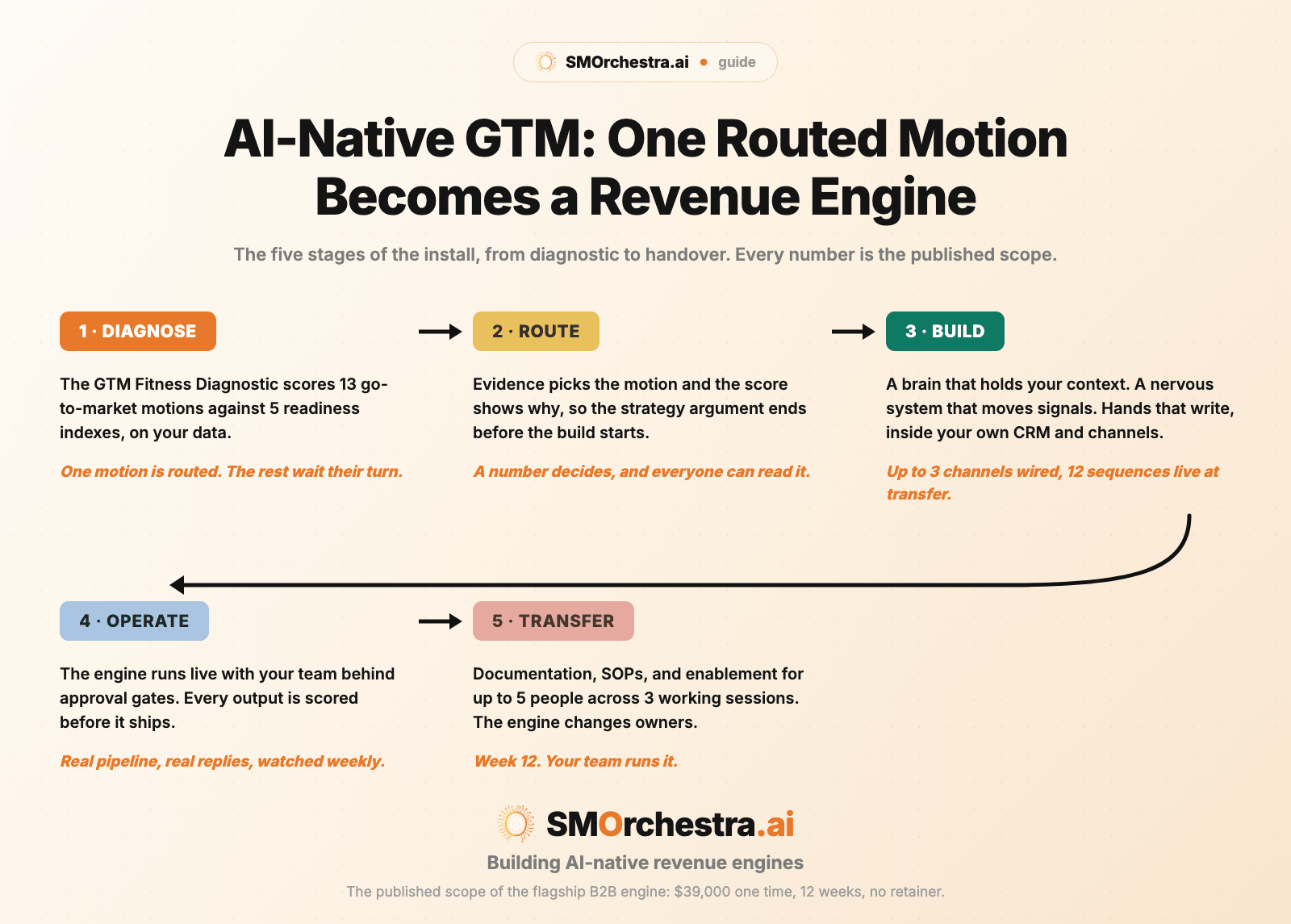
The install starts with the GTM Fitness Diagnostic: 13 go-to-market motions scored against 5 readiness indexes, on the company’s own data. One motion gets routed, and the score is written down, so the strategy argument ends before the build begins.
That single routed motion is the unit of an AI-native GTM. Everything that follows, the build, the operating weeks, the handover, serves that one motion until it produces.
The engine that runs the motion has three layers
The routed motion is built as an AI-native revenue engine, and the engine has three named layers.
The brain holds the company’s context: offer, pricing, objections, tone, and the rules for what may ship without a human. The nervous system moves work and buying signals between tools, powered by Claude. The hands write and send, inside the company’s own CRM and channels rather than a platform the vendor keeps.
The published build scope wires up to 3 channels and leaves up to 12 sequences or content workflows live at transfer, in English and Arabic.
Scored output is the discipline that makes it AI-native
Every draft the engine produces is scored before it ships, against the same rubric the team saw during the build. Below the bar, it never leaves the building. That gate is what separates an engine from a pile of automations: automations send, an engine decides whether sending is deserved.
The operating weeks run live with the client’s team behind approval gates. Real pipeline, real replies, reviewed weekly with the score sheet open.
Signal-based, because relationship coverage runs out
Relationship-based selling is a tax on growth: the pipeline is capped by who the founder and the two best sellers happen to know, and it thins every time one of them travels. A routed motion works from buying signals, so attention lands on the accounts showing evidence of intent this week.
The Gulf raises the bar further. A US cadence dropped into Riyadh or Dubai gets read as noise. The engine ships bilingual, treats WhatsApp as a working channel, and is tuned on the company’s own market rather than a playbook imported with the software.
The engine changes owners at week 12
Transfer is in the scope, priced and scheduled: documentation, SOPs, and enablement for up to 5 people across 3 working sessions. After week 12 the client’s team runs the engine, and the vendor relationship is over unless the client wants more built.
The published price for the flagship B2B engine is $39,000, one time, no retainer. The full ladder, including the smaller routes in, is on the pricing page.
Frequently asked questions
What is AI-native GTM?
How is this different from hiring a GTM agency?
What do the 12 weeks include?
Does it work in Arabic?
What happens after the transfer?
See the three revenue engines.
B2B, expert-led, and enterprise. Each one is built on your stack, operated with your team, and transferred with the documentation to run it.
Explore the engines