AI-native employees for every department. One operating system runs them. Your team, trained to lead them.
We start by training your team. Then we build the employees each department needs, run them with you, and hand everything over. They do the work no one can, or wants to, do. Your people keep the judgment.
Built on Claude · Registered member of the Claude Partner NetworkWe run SMOrchestra on the same architecture: 100+ operating systems, 900+ skills, 39 live tool connections
Not sure where to start? Book the one-day audit.
An AI-native operating system at the centre, running six AI-native employees: a personal assistant, a social media manager, a sales nurture specialist, a data analyst, a video editor and a finance clerk, with finished work flowing back to the centre.
Brands we work with.
From real-estate developers and construction to healthcare, higher education, B2B and training.















Uniphore mdr Princess Sumaya University for Technology Taqniyat CX-Dubai mdr construction Specialized Medical Center Graia Dtec, Dubai Technology Entrepreneur Campus ICXI mdr real estate marketing Arcet Global LAB experience New Mind mdr property management
We take your business from the red to the blue.

of office and admin tasks AI could take on, in theory
covered in real use, on average, across office and admin, business and finance, sales, and computer and math
Same model for everyone. The difference is what you build.
Who holds it all together?
Today, you are the glue.
Tomorrow, the AI-native operating system is.
Same tools. Same people. One centre. You go back to decisions.
Software is something you log into. An operating system is how the work gets done.
- SOPsHow each job is done
- StandardsWhat good looks like
- OrganisationOwners, cadences, decision rights
- Autonomous employeesRun on schedule
- Agentic employeesRun when triggered
- Your peopleDecide, approve, handle exceptions
You trigger it. The employee does the work; you approve before anything leaves. For judgment, money or reputation.
It triggers itself. Runs on a schedule, scores its own output, escalates exceptions. For repeatable work with clear rules.
The OS comes first. Employees are who you hire into it.
Runs on Claude, wired into the CRM, WhatsApp and tools you already use.
One operating system. A squad of AI-native employees.
Personal Assistant
Buys back your time
- Inbox triaged, replies drafted
- The morning brief
- The weekly report
Social Media Manager
Gets you seen
- Posts in your voice
- Carousels and infographics
- The weekly posting plan
Video Editor
One recording, many clips
- Clips from one recording
- Captions and thumbnails
- Hooks scored before posting
Data Analyst
Turns files into decisions
- Data cleaned and checked
- Your questions, in numbers
- A dashboard and a decision brief
Same model under all four. Different brain, skills and standards.
In your industry
Real-estate developers and construction
Social Media Manager · Enquiry follow-up on WhatsApp · Project reporting analyst
Healthcare
Patient booking coordinator · A clinic operating system
B2B
Outbound specialist · Account research analyst · Proposal writer
See the B2B revenue engineTraining companies
Enrolment follow-up · Content engine · Webinar operations
The five levels of an AI-native employee. The command gets shorter as the employee gets built.
Same Claude at every level. The level is not a trait of the model; it is how many layers you built underneath it before you typed.
A fresh graduate. Works on your files, but you explain everything, every time.
Learned your way of doing one job, and now repeats it right without being reminded.
Skills installed, your tools connected. It opens, reads and prepares inside them.
One job run end to end: your skills, your folder, your tool keys, in concert.
Many employees, each with its skills, one orchestrator running them from one cockpit.
Same model in all five. The difference is how many layers you built under it.
Three operating systems run a company.
Revenue OS
Brings the money in
- Inbound OS
- Outbound OS
- Ads OS
- 7-11-4 relationship GTM
- OMF, offer-market fit
Same pattern inside every one. Input, the system, scored output.
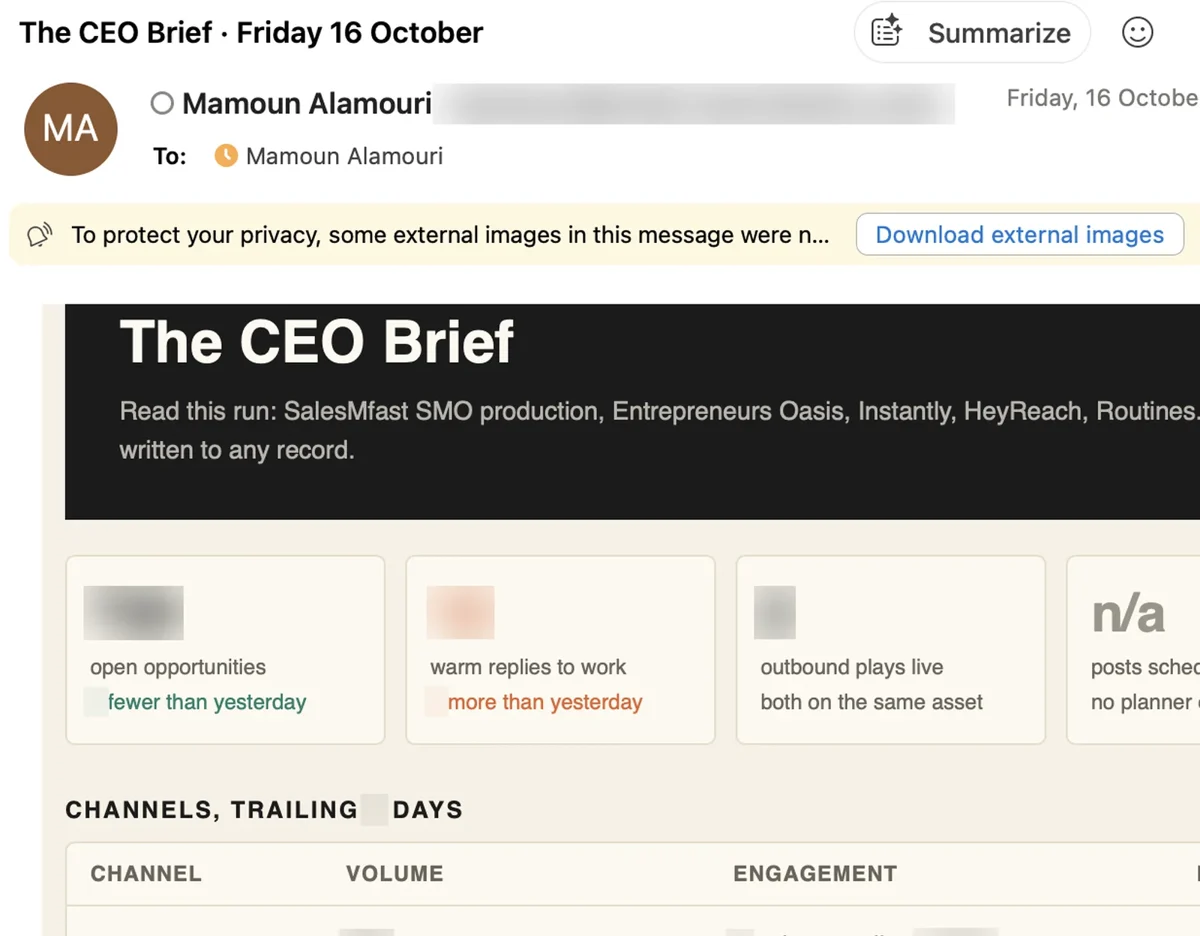
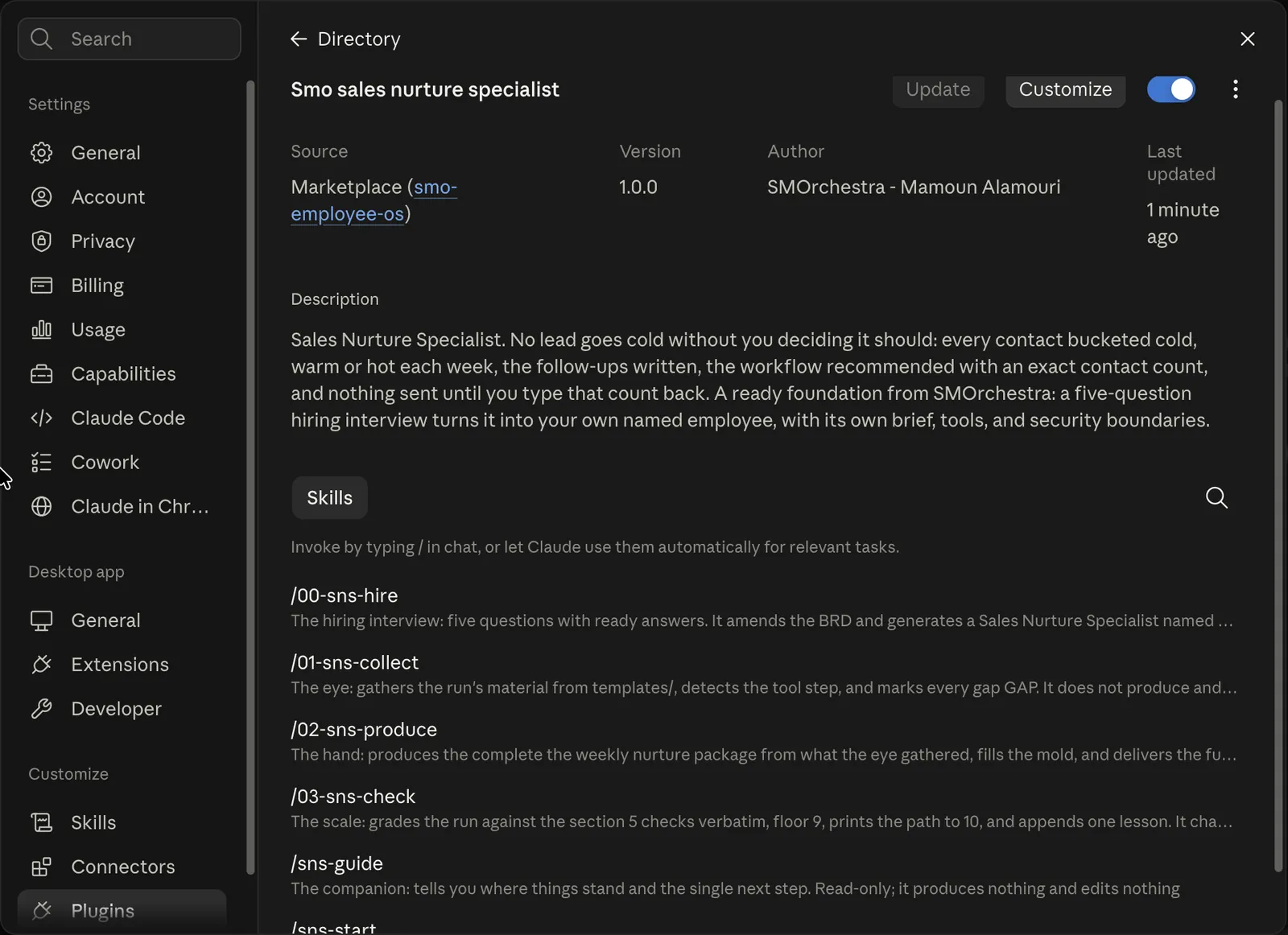
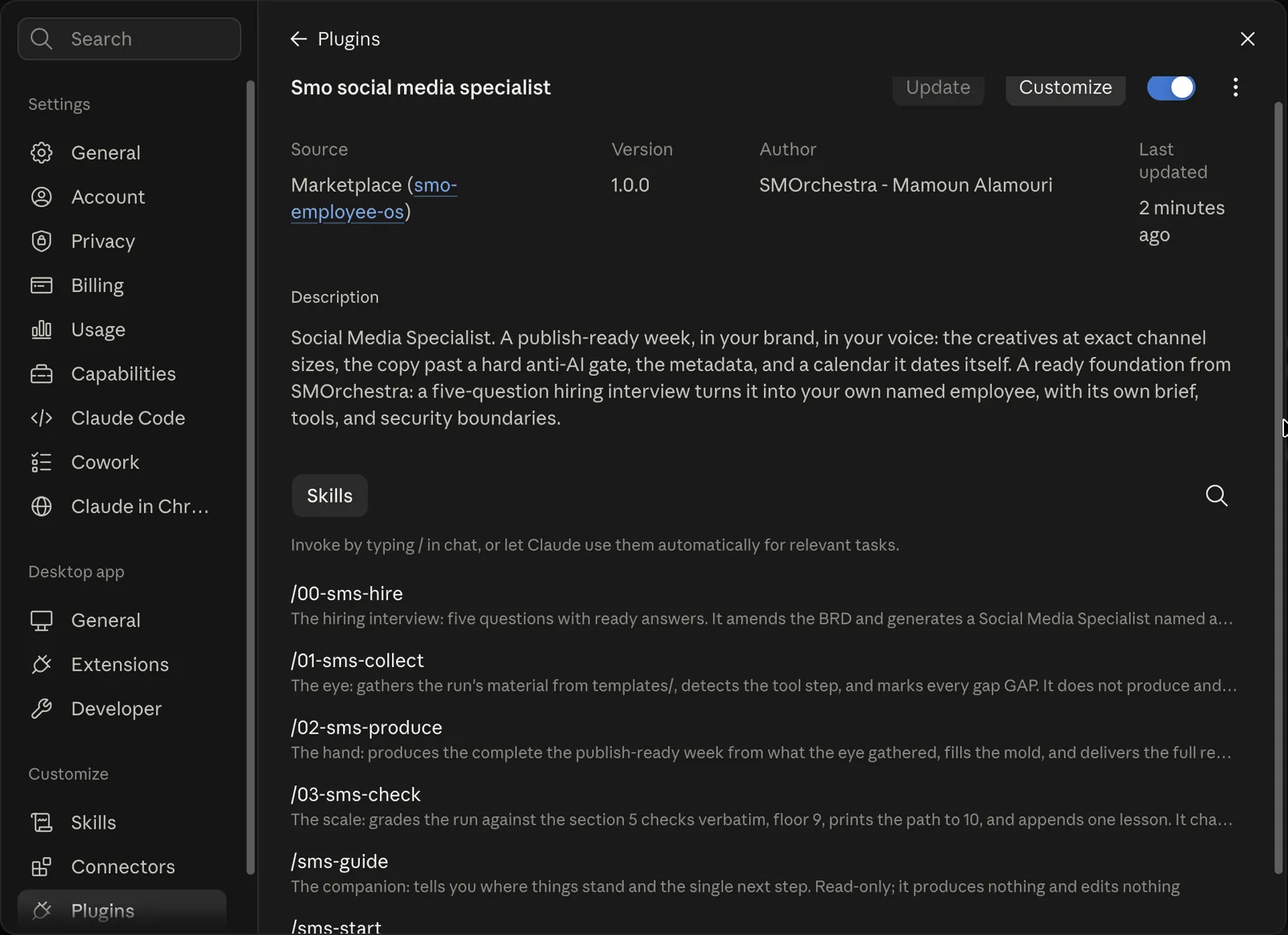
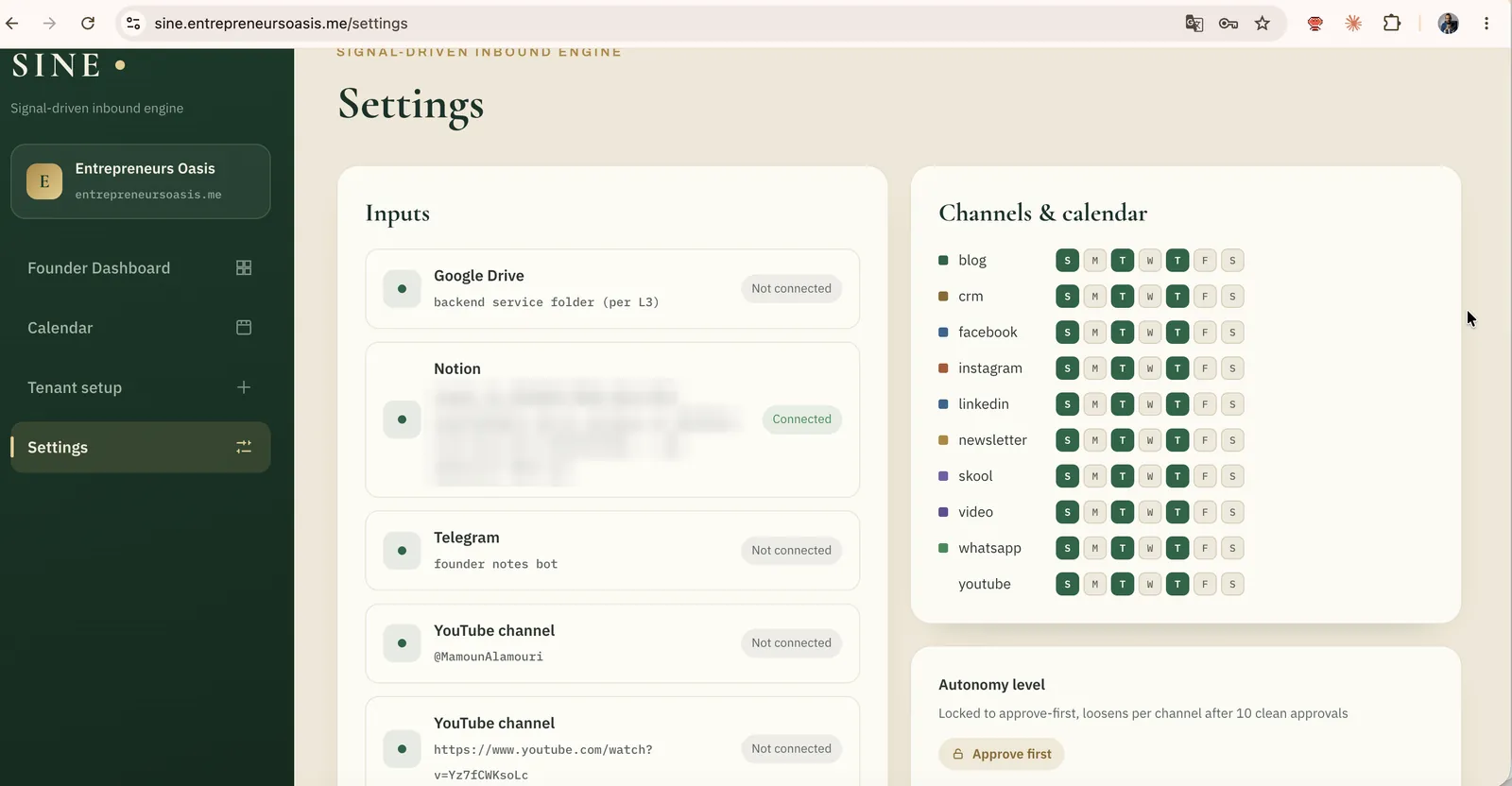
Not slides. Employees and operating systems, running.
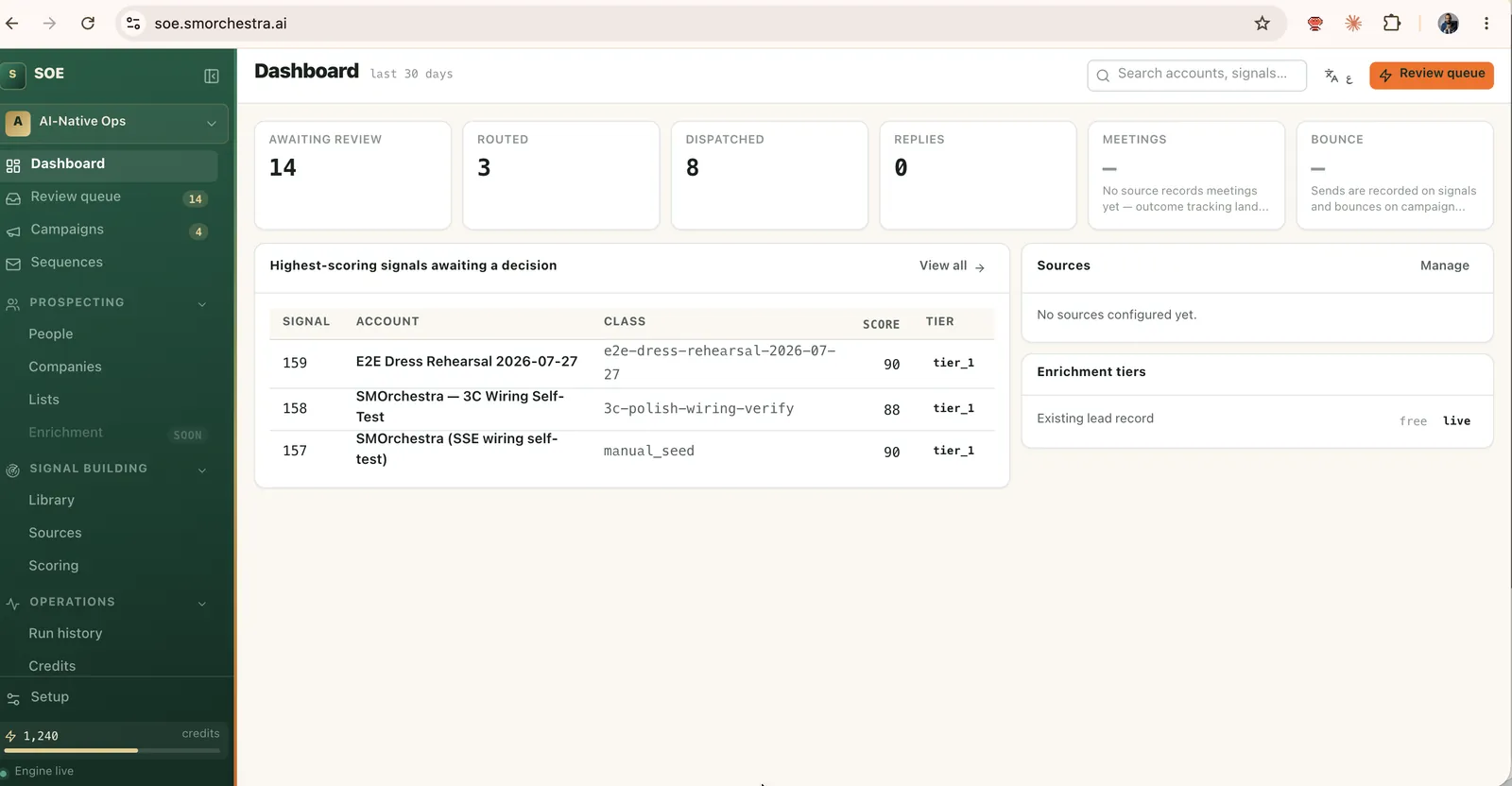
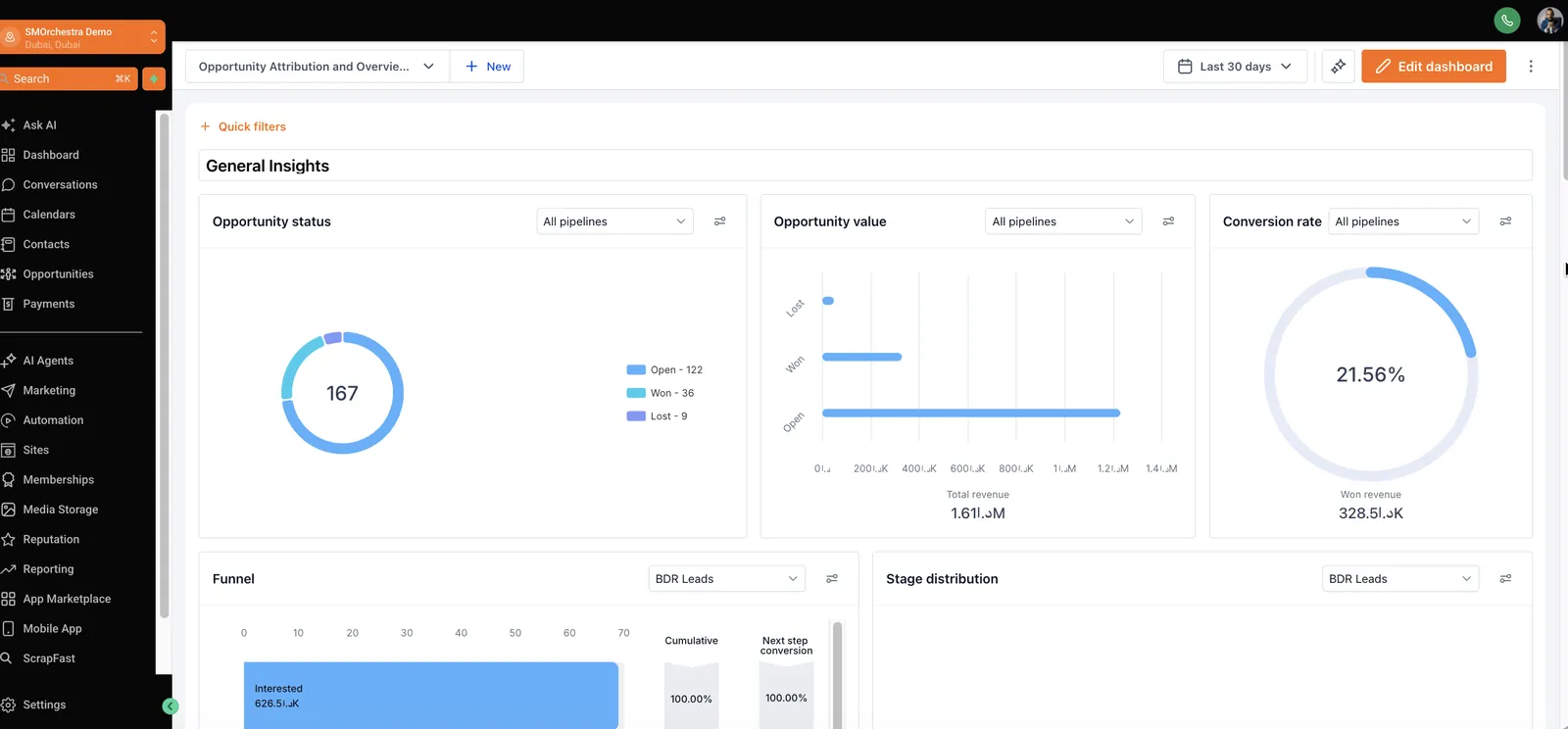
Every one below was built in Claude, wired into real tools and run with a real team. The screens are captures of them working.
AI-native employees
Marketing and content
- Social Media Manager
- SEO and GEO Specialist
- Marketing Manager
- Campaign Manager
- Video Editor
- Product Video Generator
Revenue
- Outbound Revenue Engine
- AI-Native Outbound Engine
- Nurture GTM Specialist
- AI-Native Ads Engine
- Sales Ops
Operations and service
- Booking Assistant
- Support Agents
- HR Manager
- Data Analyst
Leadership
- Personal Assistant
- Business Manager
- Co-Founder
Operating systems
Revenue
- Signal Inbound Engine (SINE)
- Signal Outbound Engine (SOE)
- Signal Ads Engine (SAE)
- Sales Operations Engine
Engineering
- AI-Native Engineering for MicroSaaS
- AI-Native Engineering for AI Agents
Business
- SME Operating System
Screens, captured running
Every engagement starts with training.
Your people learn to direct AI-native employees before we build them. Every program ends with a working system, not a certificate.
For individuals
Stop collecting prompts. Start owning systems.
- Master ClaudeOne live day · $297
- Build Your AI-Native Employees in Claude3 live days · $1,750
- Build Your AI-Native Revenue Engine in Claude3 days, then 12 weeks guided · $6,500
- Business OS · Marketing Department · MicroSaaS · Dev DepartmentWaitlist
For companies
Everyone has the same AI model. Almost nobody has the system.
- Hire AI-Native Employees Safely and Consciously in ClaudeRecommended start · department heads, 2 days · $12,000
- Who Signs Off When Claude Is Wrong?Boards, half a day · $5,000
- Employees for Teams · Revenue Engine for Teams · Agentic Operating System · Built for youFrom $15,000
“Let’s hire AI to replace our staff.”
That’s the last use case. Start with these.
- 01
What are you procrastinating?
- 02
Freed from it, what would your team focus on?
- 03
What do you wish was off your to-do list?
- 04
Which revenue work never gets enough hours?
- 05
Which chores does everyone hate?
- 06
Where do you hire agencies?
- 07
What are you outsourcing today?
- 08
Where do things get lost: communication, comprehension, translation?
- 09
Where is orchestration hardest?
Your first AI employee is hiding in these answers.
They rent you capability. We transfer it.
Every engagement has an end date. We build, we run it with your team, then we hand over the whole system: accounts, code, configs, data. Transfer happens inside the last weeks of operation, while it is still running, with us in the room.
Built on Claude. The model is becoming a commodity. The operating system is what you own.
Three ways in. Every price published.
No founding pricing, no introductory rate, no "contact us for a quote". If a number is on this page it is the number on the contract.
What we need from you: four hours a week and one decision-maker who can say yes without a committee.

I've sat in every seat this engine replaces.
That's the whole reason it exists.
Twenty-two years inside Google, Cisco, Avaya and Uniphore, then VP Sales and founder-operator work for my own bets: the same stack MENA founders are being sold as "transformation", enterprise sales, RevOps, GTM for B2B SaaS, expansion into Saudi and the UAE. I was the VP of Sales watching CRMs go unfilled. The head of GTM hiring SDRs we couldn't actually retain in Dubai. The founder quoting a client a six-figure rebuild we both knew would slip by four months.
At some point it stopped being a people problem. The roles existed. The playbooks existed. The talent, on the Western side, was plentiful. What didn't exist was a way to install that capability into a MENA-based founder's business without first winning the North American hiring war.
An AI-native revenue engine is the answer I wish I'd been able to buy fifteen years ago. It's the way we finally stop telling MENA founders they need to hire a Riyadh SDR who doesn't exist, or retain a Dubai RevOps lead who'll leave for Careem in six months. The operating system is the hire. The transfer makes it yours.
This isn't for everyone. Here's how to tell.
We'd rather you self-select out in 30 seconds than ten weeks in. The OS only compounds if the founder is ready to operate it, not just buy it. Read both columns. If one feels more true than the other, you already have your answer.
- A founder or operator doing five jobs at once and losing on all of them.
- Past founder-selling and above $500,000 in annual revenue, with a sales team of two to twenty.
- Operating in MENA or selling into it: real-estate developers and construction, healthcare, B2B and training companies. WhatsApp, dialect and trust-first buying are non-negotiable.
- Willing to be in the room for the twelve weeks while we build the engine with you, not just for you.
- Serious about owning the stack, accounts, code, configs, end-state, not rental.
- Looking for a cheaper agency retainer, we charge for the transfer, not the dependency.
- Below the $500,000 revenue floor. Start with the $6,500 cohort instead, a motion has to convert before it is worth building an engine around it.
- Expecting a SaaS with a login, a pricing page, and a 14-day trial, there's no product to subscribe to.
- Unwilling to touch the tools, you want AI that runs while you never learn what it does.
- Looking for someone to hand a deck to and disappear, this is build-operate-transfer, not a handoff.
Not a RevOps consultant. Not a SaaS. Not a retainer.
Every category someone tries to slot us into gets the shape wrong. A revenue engine you own sits somewhere new, and that's the whole point.
Consultants ship slide decks and leave you with an even bigger to-do list. We ship installed systems you own and operate after we walk away.
There's no login, no seat pricing, no feature flag gate. The tools are yours, Claude, n8n, Supabase, Stripe, all in your name, your accounts, your control.
Agencies bill for hours you don't see. We bill for a build, operate it beside you, then transfer it. The optional retainer after that is maintenance, not survival.
A build-operate-transfer team that installs one of the three pillars on Claude-native infrastructure, and then hands you the keys. Once. Properly.
Six questions, answered straight.
What is an AI-native employee?
An AI that holds a job, not a chat: a role, a brief, tools and a scorecard. It does the work, and someone on your team checks it before anything leaves.
What is an AI-native operating system?
The centre every AI-native employee runs on: memory, skills, quality gates and one scorecard, wired into the CRM, WhatsApp and tools you already use. One operating system runs the employees of every department.
Where do we start?
With training. Your team learns to direct AI-native employees before we build them, and every program ends with a working system, not a certificate. Then we build the employees each department needs and the operating system that runs them.
Do we need Claude?
Yes. Claude is our core: every employee and operating system we build runs on it. We wire it into the tools you already run: your CRM, WhatsApp, email and files.
Who owns it at the end?
You do. We build it, run it with your team, then transfer the whole system: accounts, code, configs and data. Every engagement has an end date and no retainer.
Which industries do you build for?
Real-estate developers and construction, healthcare, B2B and training companies, plus coaching, e-commerce, founders and SMEs. The proof section above shows what we built for each.
The future of growth is ANB.
ANB. The AI-native business.
AI does the work no one can, or wants to, do. People do the work only people can do: judgment, relationships and decisions.
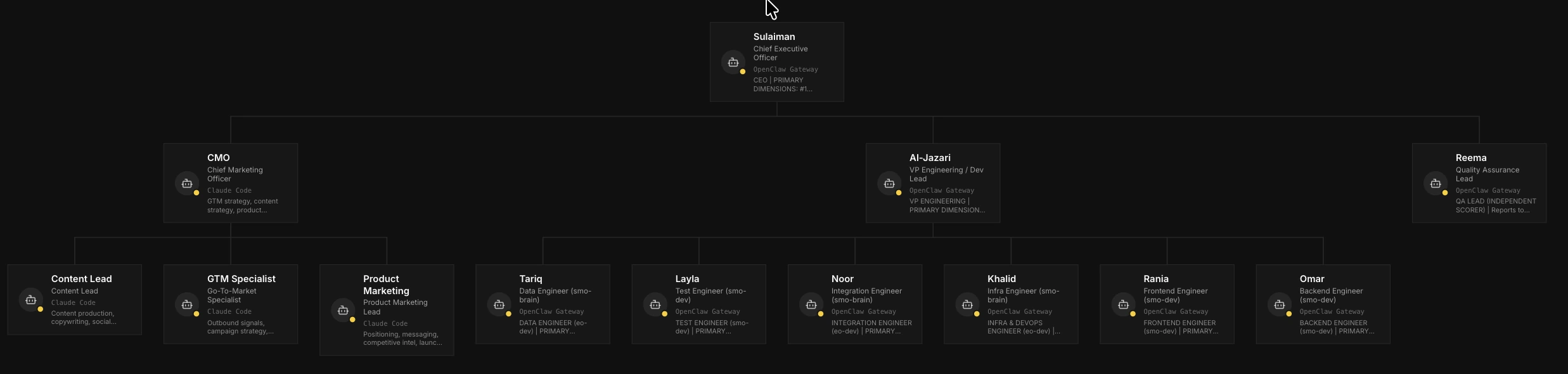
Here is our AI organization.
 12345678910111213
roles on one board.
Every one is an AI agent.
human directs it, from Telegram.
This is our development company, running today. Every cockpit reports to Sulaiman, the AI CEO, and every role is an AI-native employee on one operating system.
- 01
AI-native employee
An AI that holds a job, not a chat: a role, a brief, tools and a scorecard. It does the work, and someone checks it.
- 02
AI-native operating system
The centre every employee runs on: memory, skills, quality gates and one scorecard.
- 03
AI-native business
A company built so AI employees run the routine work in every department, all reporting into one system.
- 04
The director: you
You set the standard, approve what matters and make the decisions.
Not ready to talk? Read how we build on the blog, or take one argument a week in the Tuesday letter.