AI-native development is software written by AI under engineering supervision, priced as an outcome rather than a headcount, and owned by the client at handover. SMOrchestra turns one workflow into a MicroSaaS in 14 weeks for $45,000, with Claude Code writing the code and the client keeping the repository and the data outright.
The receipt that started the practice
One client tool took 25 hours at a build cost of $150 to $200, saving over $100,000, and DocuSign alone had reached $25,000 a year before it. That is the arithmetic of AI-native development in one line: the cost of building collapsed while the price of renting kept compounding.
The tool replaced a stack of subscriptions with one piece of owned software shaped to the firm’s actual workflow. The firm now holds the capability, and the renewal calendar holds nothing.
What makes development AI-native
Claude Code writes the software, and an engineer supervises the architecture, the reviews, and the gates. The economics move with the labor: a build is priced as an outcome with an end date, and 25 hours of supervised AI work now produces what a small team used to bill a quarter for.
Owning the output is the second half of the definition. The client’s stack hosts the software, the client’s name is on the repository, and the data never lives in someone else’s tenancy.
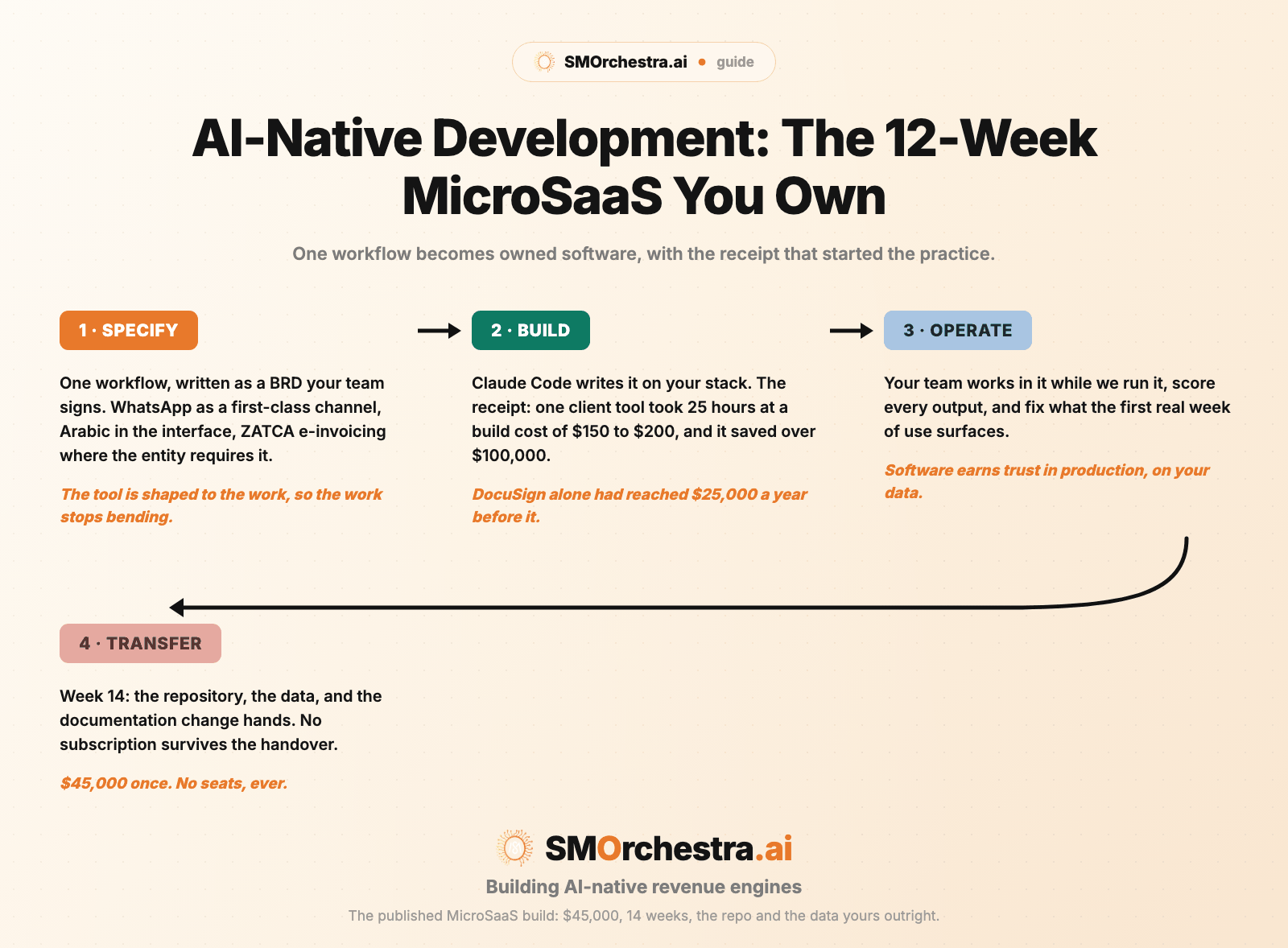
The 12-week build, from BRD to handover
Week 1 produces a BRD the client signs, so scope is a document rather than a feeling. The build runs on the client’s stack, and the operating weeks put the software in front of the team that will live in it, with every output scored and the first week of real use driving the fixes.
Week 12 is the transfer: the repository, the data, and the documentation change hands. $45,000, one time. No seat expands the bill later, because there are no seats.
Built for the Gulf from the first line of the spec
WhatsApp Business is a first-class channel in the data model. Invoicing complies with UAE corporate tax, and with ZATCA e-invoicing where the entity requires it. The interface runs Arabic right to left, and the calendar logic respects the Gulf weekend. A vendor shipping from Boston treats every one of those as a configuration request; here they are in the BRD.
Rent or own is arithmetic, run it yearly
Seats renew every year and reprice at the vendor’s discretion; a build ends. The honest comparison is your seat count times the renewal price, run over three years, against one build with a handover date. For the workflows a company runs daily, the crossover usually arrives embarrassingly early, and the rent-to-own breakdown walks that math line by line.
Frequently asked questions
What is AI-native development?
Is a MicroSaaS the same as custom software?
Who maintains it after the transfer?
What does it cost and how long does it take?
What does Claude Code actually do in the build?
See the MicroSaaS build.
One workflow, specified as a BRD, built on your stack, and transferred at week 12 with the repository and the data in your name.
Explore the build