12 Best AI-Assisted Sales Automation Systems to Convert More Leads
In a market where every missed call or delayed WhatsApp inquiry means a lost appointment, manual follow-ups are a direct path to revenue loss. For clinics and service businesses, the problem isn't a lack of leads; it's the failure to engage them instantly and persistently on channels like WhatsApp, SMS, and phone. This crucial gap between inquiry and booking is where potential patients and clients slip through the cracks. This is where AI-assisted sales automation systems become essential, acting as a tireless AI agent to capture, qualify, and convert every opportunity into a confirmed appointment.
This guide goes beyond generic reviews to analyze the top 12 platforms based on the real buying criteria for appointment-driven businesses. We will dissect each solution's automation depth, AI agent capabilities, omnichannel follow-up strengths (WhatsApp, Instagram, email, SMS, calls), CRM integration, and ease of deployment. When evaluating these systems, a critical feature is advanced Smart Routing AI Models which can instantly assign the right lead to the right agent or automated sequence, maximizing conversion speed.
Here, you'll find a detailed breakdown of each platform, complete with screenshots and direct links, to help you make an informed decision. We will assess their strengths, limitations, and which type of clinic or business each fits best—from those in the GCC needing robust WhatsApp automation to larger organizations requiring deep CRM integration. Our goal is to equip you with the insights needed to select a system that doesn't just automate tasks but transforms your lead follow-up process into a predictable, high-conversion machine.
1. SMOrchestra
Best for: Clinics and service-based businesses that need to convert missed calls and inquiries into booked appointments using automated, omnichannel follow-ups.
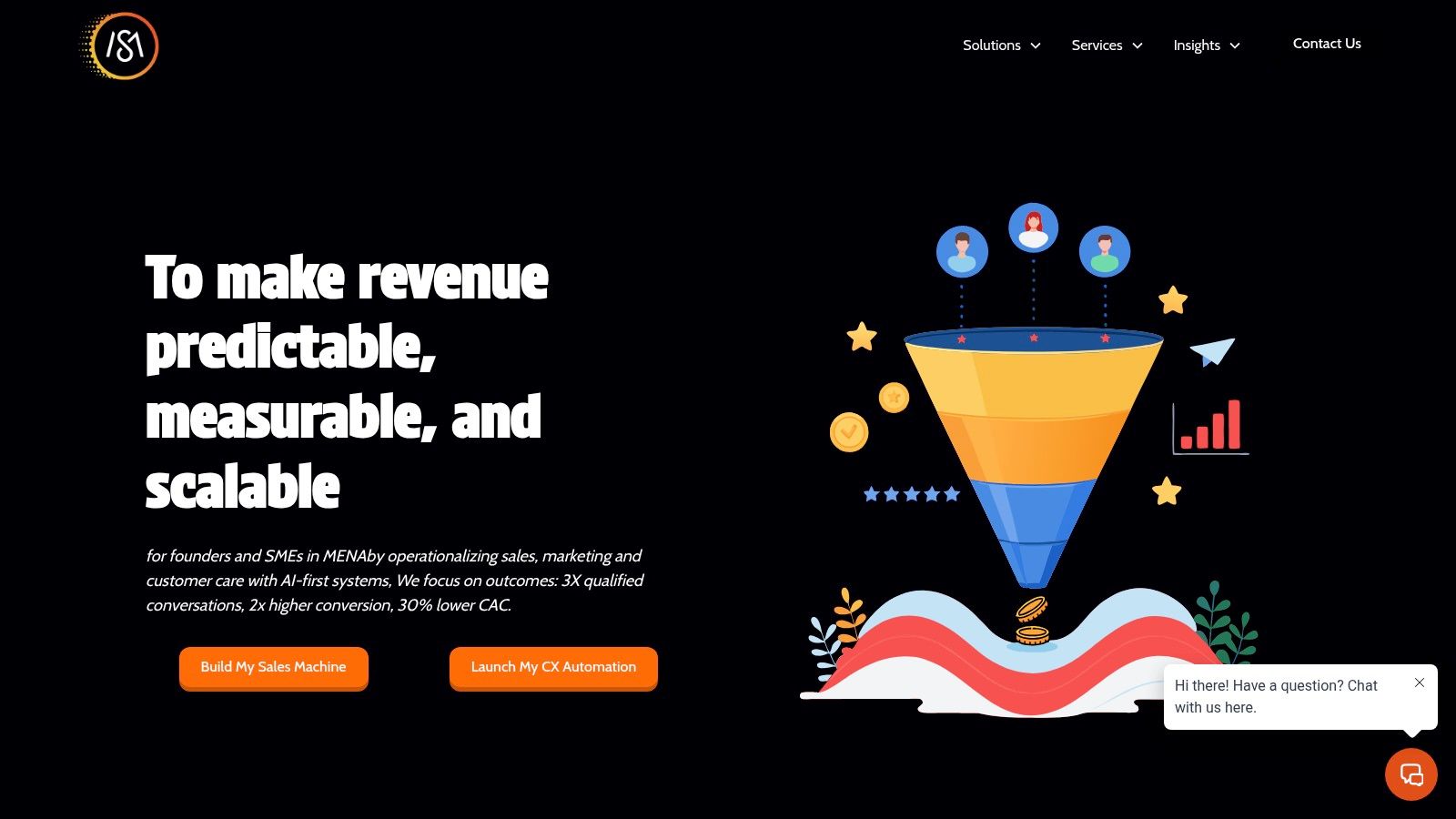
SMOrchestra is designed as a specialized "AI Sales Machine" that solves the critical problem of lead leakage from missed calls and delayed inquiry responses. Instead of providing a complex DIY software, it offers a fully managed, AI-powered system that turns every inquiry into a conversation. Its AI agents engage leads instantly across WhatsApp, SMS, email, and phone, then execute persistent follow-up sequences until an appointment is booked. This outcome-focused approach makes it ideal for clinics, medspas, and service businesses that need to increase their booking rates without hiring more staff.
Key Strengths and Capabilities
The platform’s core strength is its ability to create relentless, automated follow-up across the channels that matter most for immediate engagement. It excels at creating bilingual (Arabic/English) journeys on WhatsApp, a critical channel in the MENA/GCC region. The service model is results-driven, with SMOrchestra operating the system for clients to hit targets like a 30-50% increase in lead-to-appointment conversion or a 60% automation of routine booking inquiries. This is particularly effective for businesses that lose revenue to unanswered calls or slow follow-ups. As a specialized AI automation agency, SMOrchestra offers deeper insights into building these kinds of revenue machines on smorchestra.com.
Practical Use Cases
A typical implementation for a clinic involves SMOrchestra’s AI agent instantly responding to a missed call via WhatsApp, engaging the lead in a conversation to qualify them and book an appointment directly into the calendar. For online inquiries, it automates the entire follow-up process, ensuring no lead goes cold. Its "SalesMfast for Clinics" package is designed for rapid deployment, guaranteeing a measurable increase in booked appointments.
- Specifically designed to solve missed calls and slow lead response.
- AI agents automate follow-ups on WhatsApp, SMS, email, and phone.
- Fully managed "done-for-you" service guarantees outcomes like more booked appointments.
- Strong MENA focus with bilingual (Arabic/English) capabilities.
- Not a general-purpose CRM; it's a specialized appointment-booking engine.
- Pricing requires a consultation as it's a managed service, not a simple software subscription.
Access: Engagement begins with a free strategy session to diagnose your lead follow-up process, available via their website.
2. Salesforce Sales Cloud (with Einstein/Agentforce)
Best for: Large enterprises needing a highly customizable, enterprise-grade CRM with deep data analytics and process governance.
Salesforce Sales Cloud, enhanced by its AI layer Einstein, is a powerful platform for complex sales organizations that require extensive customization and a vast ecosystem of third-party apps. Its strength lies in managing intricate sales cycles, providing predictive lead scoring, and offering sophisticated revenue forecasting. It's an excellent choice for large corporations that need a central system of record to manage sales data across multiple departments and regions.
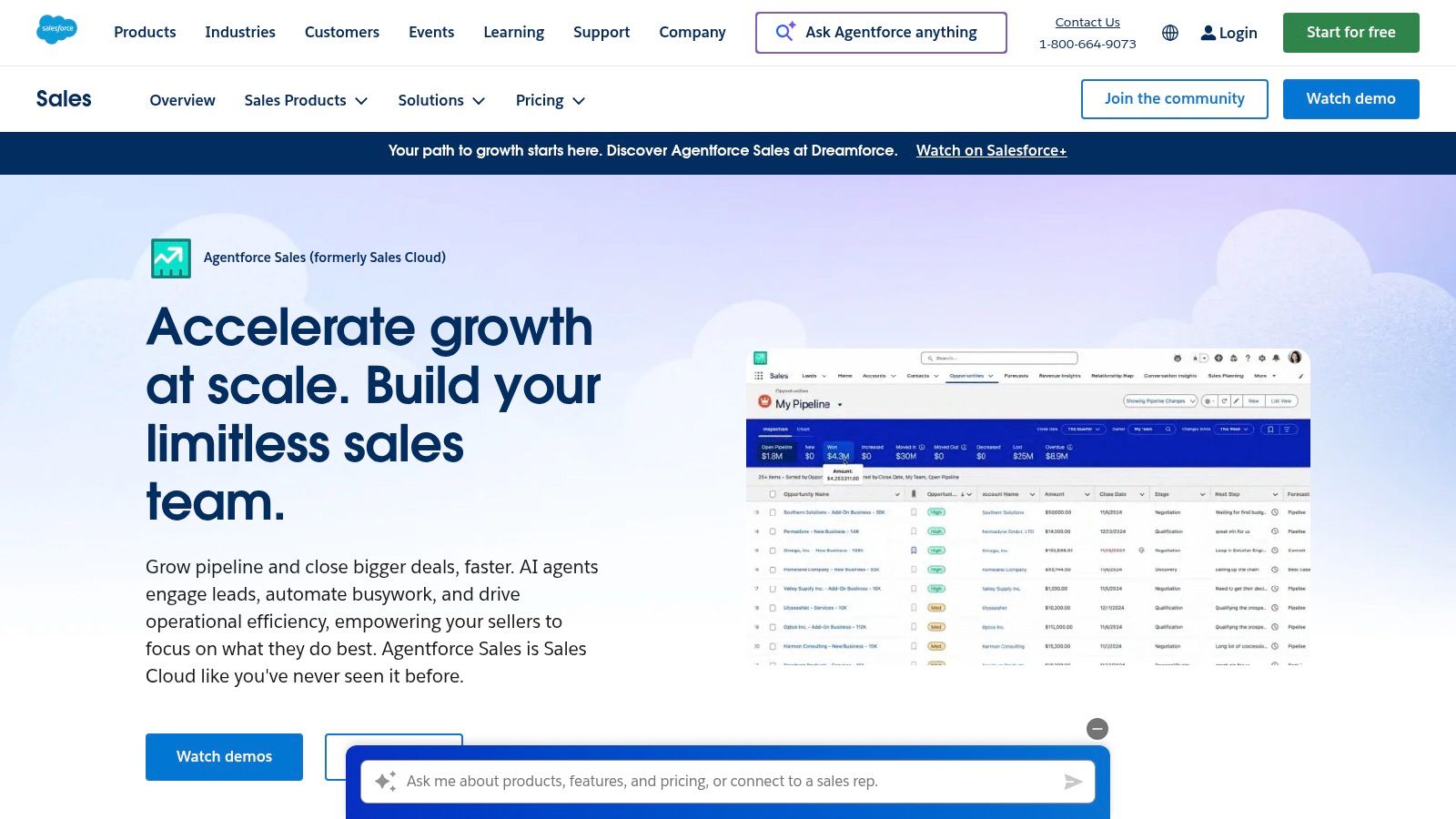
The platform’s AI features are geared towards optimizing internal sales team performance. Einstein helps prioritize high-value leads and opportunities, while Conversation Intelligence analyzes sales calls for coaching insights. However, its core focus is on data management and internal workflow automation rather than direct, front-line lead engagement like instant missed call follow-up. You can discover more about effective AI-driven lead scoring to see how these systems operate.
Key Strengths & Considerations
- Pros: Infinitely customizable with a massive AppExchange ecosystem. Powerful analytics and enterprise-level security. Strong partner network for implementation.
- Cons: Extremely complex and expensive, requiring dedicated administrators. AI features are often costly add-ons. Overkill for businesses whose primary need is automating appointment booking from new inquiries. Steep learning curve.
Website: https://www.salesforce.com/sales/
3. Microsoft Dynamics 365 Sales (with Copilot)
Best for: Organizations already heavily invested in the Microsoft ecosystem (Office 365, Azure, Teams) that need a deeply integrated CRM.
Microsoft Dynamics 365 Sales leverages the power of Copilot, its generative AI assistant, to enhance seller productivity within the familiar Microsoft environment. Its main advantage is the seamless integration with Outlook and Teams, allowing sales reps to manage CRM tasks without leaving their primary applications. This makes it a strong contender for enterprises prioritizing unified workflows and leveraging their existing Microsoft licenses.
Copilot assists with tasks like drafting emails, summarizing conversations, and preparing for meetings. The platform focuses on improving internal efficiency and data management. While it can be configured for sales automation, it doesn't offer out-of-the-box AI agents for immediate, omnichannel lead engagement or missed call handling. Implementing such systems requires careful change management strategies when adopting new software like Microsoft Copilot.
Key Strengths & Considerations
- Pros: Unmatched integration with Microsoft 365. Strong security and compliance features with Azure. Familiar interface for users of Microsoft products.
- Cons: Licensing is complex and can be expensive. Value is maximized only when fully committed to the Microsoft stack. Lacks specialized features for high-speed lead follow-up and appointment setting.
Website: https://dynamics.microsoft.com/sales/
4. HubSpot Sales Hub
Best for: SMBs and mid-market companies looking for an all-in-one CRM platform that combines sales, marketing, and service tools with a user-friendly interface.
HubSpot Sales Hub is known for its ease of use and comprehensive feature set, making it a popular choice for businesses that want a single platform to manage the entire customer lifecycle. Its strength is in its inbound marketing roots, providing powerful tools for content marketing, email campaigns, and lead nurturing through its "Sequences" feature. It offers a solid foundation for building automated sales processes.
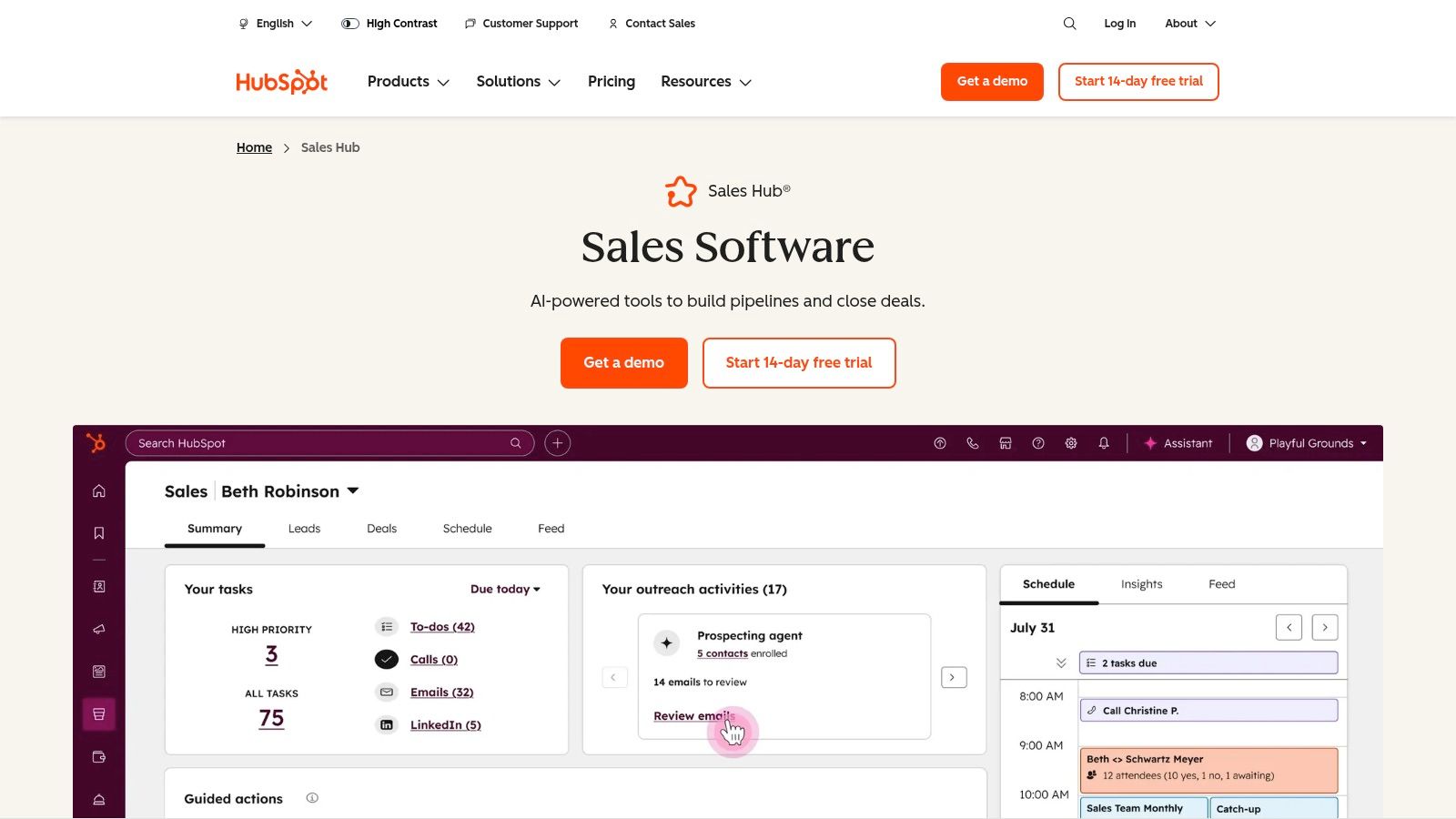
The platform's approach to AI-assisted sales automation systems focuses on simplifying workflows. It includes features for lead scoring, automated email follow-ups, and call tracking. However, its automation is primarily centered around email and internal task management. While it can integrate with third-party tools for WhatsApp or advanced call handling, it does not natively provide AI agents that can autonomously handle missed calls or book appointments across multiple channels.
Key Strengths & Considerations
- Pros: Very user-friendly with extensive free learning resources. The unified platform simplifies operations across marketing and sales. Strong free CRM to get started.
- Cons: Costs escalate quickly with more contacts and advanced features. Lacks deep, native omnichannel capabilities (especially for WhatsApp and SMS). Not specifically designed for the high-speed follow-up required in appointment-driven businesses.
Website: https://www.hubspot.com/products/sales
5. Zoho CRM (Middle East hosting)
Best for: Budget-conscious businesses in the MENA region needing a comprehensive CRM with strong localization features, including Arabic language support and regional data hosting.
Zoho CRM offers an extensive suite of business applications at a competitive price point. Its key advantage for regional businesses is its commitment to localization, with UAE-based data centers and a full Arabic user interface. This makes it a strong choice for companies that need to manage bilingual sales processes and comply with data residency requirements.
The platform's AI assistant, Zia, provides lead scoring, deal predictions, and workflow suggestions. Its automation capabilities are robust for email marketing and internal task management. However, like many general-purpose CRMs, it requires integrations and significant configuration to handle real-time, omnichannel follow-ups for appointment booking. If you are looking for one of the best CRMs for small businesses that balances features and price, Zoho is a top contender.
Key Strengths & Considerations
- Pros: Excellent value for money with a wide range of features. Strong localization with Arabic support and UAE data hosting. Highly customizable.
- Cons: The vast number of features can be overwhelming. The user interface can feel less modern than competitors. Requires technical expertise to build advanced, multi-channel automations.
Website: https://www.zoho.com/crm/
6. Freshsales (Freshworks)
Best for: SMBs looking for an affordable, all-in-one CRM with built-in communication tools like phone and chat.
Freshsales provides a straightforward and accessible CRM solution that bundles key communication channels directly into the platform. This reduces the need for multiple third-party tools, making it an attractive option for small to mid-sized businesses that want to get up and running quickly with a unified sales tool.
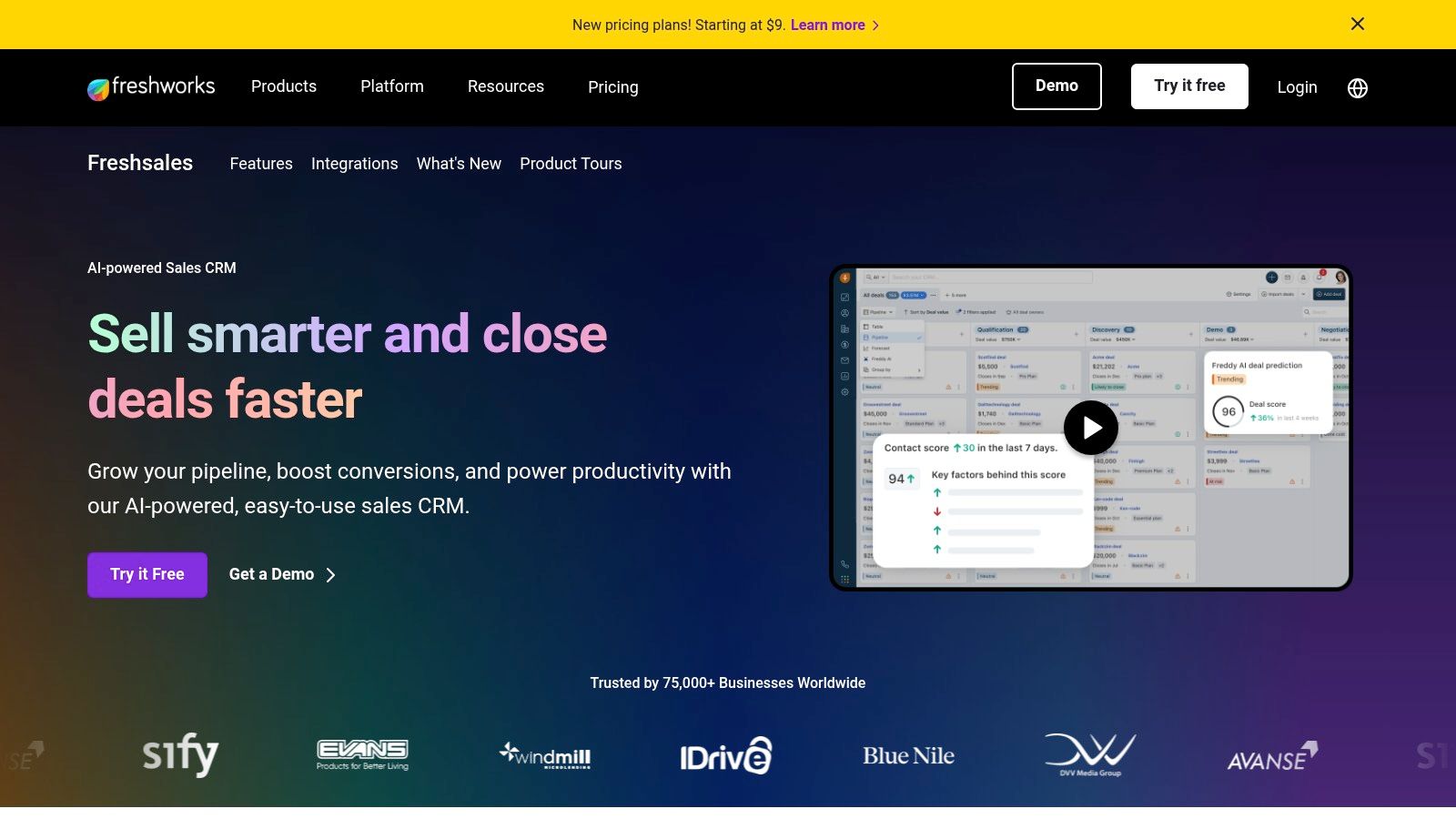
Its AI assistant, Freddy, helps with lead scoring and identifying deals at risk. Freshsales streamlines engagement with built-in telephony, email, and chat. While this is convenient, its automation capabilities are more suited for standard email sequences and internal reminders rather than sophisticated, AI-driven appointment booking across channels like WhatsApp. It is a solid choice for teams prioritizing a simple, integrated communication hub.
Key Strengths & Considerations
- Pros: Affordable and transparent pricing. The all-in-one communication suite simplifies the tech stack. Easy to set up and use.
- Cons: Lacks the deep customization of enterprise CRMs. Advanced AI and automation features are limited compared to specialized platforms. Not built to solve the specific problem of missed calls and instant appointment setting.
Website: https://www.freshworks.com/crm/
7. Pipedrive
Best for: Sales teams that want a highly visual, easy-to-use CRM focused exclusively on pipeline management and deal progression.
Pipedrive is famous for its pipeline-centric design, which makes it incredibly intuitive for salespeople. Its strength is in visualizing the sales process and helping reps focus on the activities required to move deals forward. This simplicity and focus on user adoption make it a favorite among small and medium-sized businesses that need a no-frills tool to organize their sales efforts.
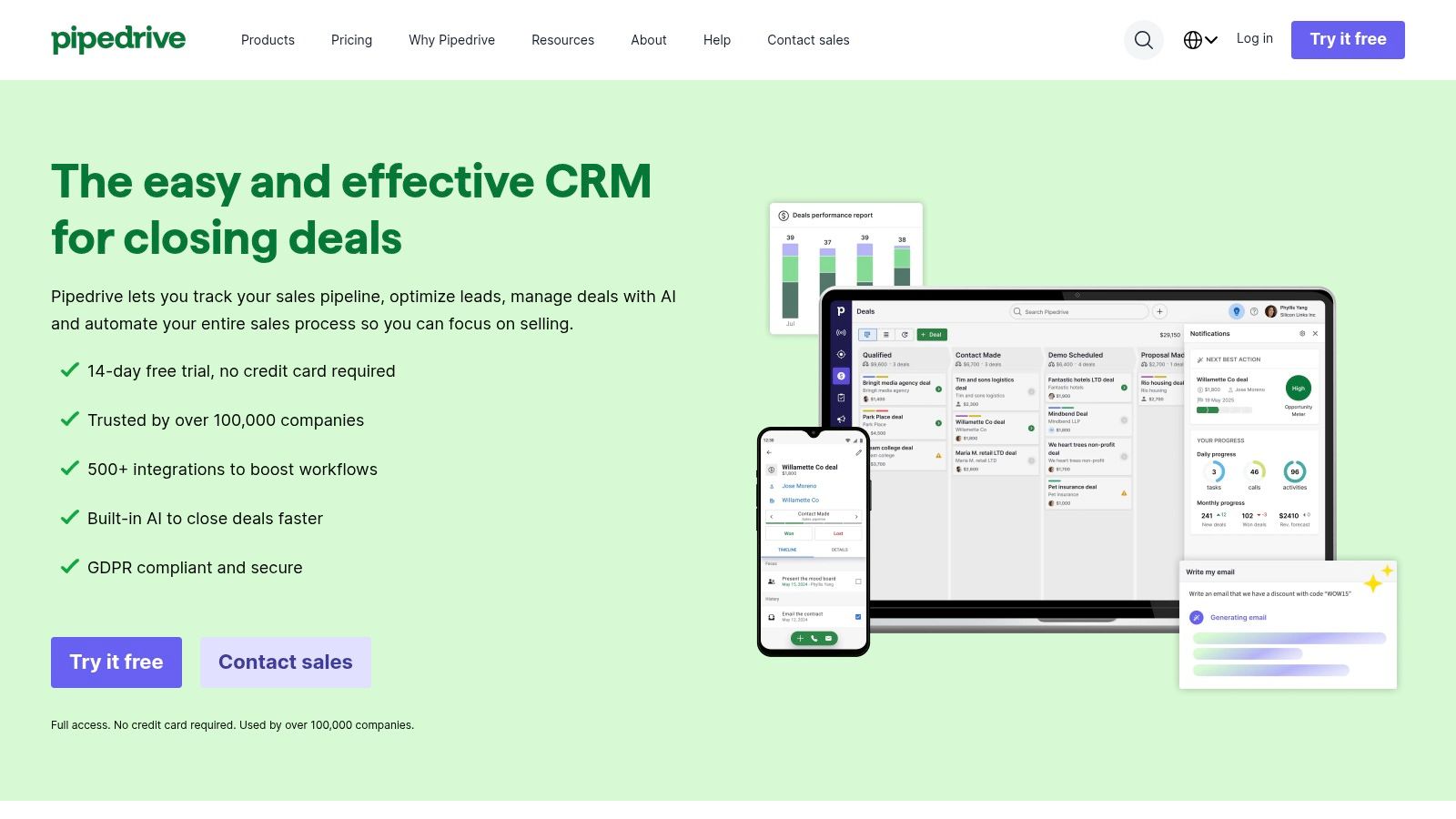
Pipedrive's automation features allow for creating tasks and sending emails based on deal stage changes. Its AI Sales Assistant provides tips on which deals need attention. However, it is fundamentally a tool for managing an existing sales pipeline, not an engine for generating appointments from raw inquiries. It lacks the native AI agents and omnichannel follow-up capabilities needed to convert missed calls into bookings automatically. It's a great component within a stack of AI-assisted sales automation systems, but not a complete solution on its own.
Key Strengths & Considerations
- Pros: Extremely easy to learn and adopt. Visual pipeline interface is highly effective for managing deals. Competitive pricing for its core functionality.
- Cons: Limited native AI and automation features. Lacks built-in omnichannel communication tools. Requires integrations for almost everything beyond basic email.
Website: https://www.pipedrive.com/
8. Outreach
Best for: Large, high-volume B2B sales teams that need a powerful platform to execute and manage structured outbound prospecting campaigns at scale.
Outreach is a sales engagement platform designed for Sales Development Representative (SDR) and Account Executive (AE) teams. It excels at creating, managing, and analyzing complex, multi-channel outreach sequences (cadences) that combine emails, calls, and social touches. It provides the governance and analytics needed for sales leaders to enforce a consistent sales process.
This platform provides powerful AI-assisted sales automation systems focused on rep productivity. Its conversation intelligence tool, Kaia, offers real-time coaching during calls. While excellent for structured B2B outbound sales, it is not designed for the inbound, high-speed nature of converting missed calls or web inquiries into appointments for service businesses or clinics. You can learn more about building predictable outbound processes to complement this type of system.
Key Strengths & Considerations
- Pros: Best-in-class for managing complex outbound sales cadences. Powerful analytics and coaching tools for sales managers. Robust governance for large teams.
- Cons: Expensive and complex, with a steep learning curve. Not suitable for SMBs or inbound-focused businesses. Overkill for appointment setting.
Website: https://www.outreach.io/
9. Salesloft
Best for: Enterprise and mid-market revenue teams focused on improving seller performance through coaching, analytics, and structured sales engagement.
Salesloft is a leading sales engagement platform that helps organizations structure seller activity and drive productivity. Similar to Outreach, it uses "Cadences" to guide sellers through multi-channel outreach sequences. It places a strong emphasis on conversation intelligence and coaching features, giving managers deep insights into rep performance.
As one of the more mature AI-assisted sales automation systems, Salesloft offers AI-powered writing assistance and forecasting. Its strong bi-directional CRM sync ensures data quality. It is an excellent platform for large, structured sales teams that need to optimize their outbound and account management processes. However, its design is not focused on the instant, automated response required to capture and convert high-intent inbound leads like missed calls or form submissions.
Key Strengths & Considerations
- Pros: Strong coaching and conversation intelligence features. Robust platform suitable for large revenue organizations. Excellent for standardizing sales processes.
- Cons: High cost and complexity, typically requiring annual contracts and user minimums. Not designed for the specific workflow of converting inbound inquiries into appointments.
Website: https://www.salesloft.com/
10. Apollo.io
Best for: Startups and sales teams needing an all-in-one platform for B2B contact data, list building, and email outreach.
Apollo.io uniquely combines a massive B2B contact database with sales engagement tools. This allows teams to find prospects, build lists, and launch email sequences all within a single, affordable platform. It is an excellent tool for top-of-funnel outbound prospecting and lead generation.
The platform's strength lies in streamlining the prospecting workflow. Its AI features can help personalize outreach emails at scale. While it is highly effective for B2B outbound sales, its capabilities are limited to email and calls. It does not offer the advanced AI agents or omnichannel follow-up (especially WhatsApp) needed to manage and convert inbound inquiries for clinics or service businesses.
Key Strengths & Considerations
- Pros: Excellent value by combining a contact database with engagement tools. Affordable pricing makes it accessible for startups. Great for building outbound prospecting lists.
- Cons: Data accuracy can be inconsistent, especially outside of North America. Limited to email and phone channels. Not suitable for managing inbound lead conversion or appointment setting.
Website: https://www.apollo.io/
11. Infobip (WhatsApp Business Platform and omnichannel)
Best for: Enterprises needing a reliable, compliant, and high-volume communication platform (CPaaS) to power their messaging across channels like WhatsApp and SMS.
Infobip is not a sales automation system itself, but rather a foundational communication infrastructure layer. As an official WhatsApp Business Platform provider, it offers enterprise-grade reliability for sending and receiving messages at scale. It is the engine that other systems can plug into to communicate with customers on channels like WhatsApp, SMS, and Viber.
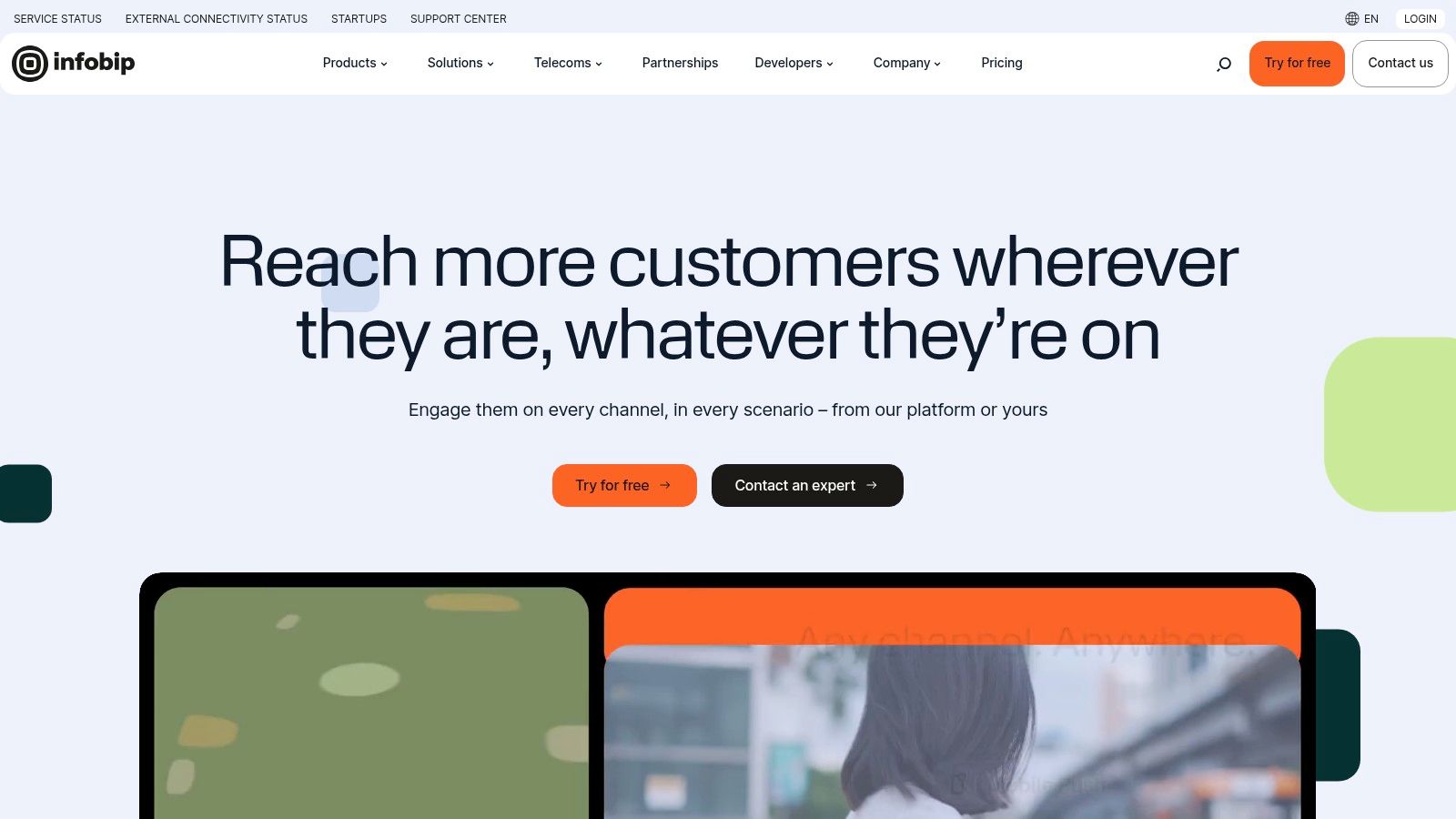
Infobip provides tools like a visual flow builder and APIs to construct automated conversational journeys. However, using it to build a complete AI-assisted sales automation system requires significant technical resources and development effort. It is ideal for large organizations that need a robust messaging backbone to integrate with their custom-built sales and support applications.
Key Strengths & Considerations
- Pros: High-volume, reliable message delivery. Strong compliance and enterprise support. Excellent for building custom communication solutions.
- Cons: Not an out-of-the-box solution. Requires technical expertise to implement and manage. Pricing can be complex, combining platform fees and per-message costs.
Website: https://www.infobip.com/
12. WhatsApp Business Platform (Meta) via Cloud API or official BSPs
Best for: Any business operating in the MENA/GCC region that needs to communicate with customers on their preferred channel.
The WhatsApp Business Platform is a non-negotiable communication channel, not a sales system. It provides the official API for businesses to engage with customers on WhatsApp in a compliant and scalable way. Any effective AI-assisted sales automation strategy for the MENA region must be built on top of this platform.
Its API-first approach allows for deep integration with CRMs and sales automation tools, enabling automated follow-ups, appointment reminders, and AI-driven conversations. Using the official platform gives businesses a verified profile (green tick), which builds trust and ensures high deliverability. You can discover how to build WhatsApp-first sales funnels for MENA to fully leverage its potential. It is the essential channel, but it requires a separate automation system to orchestrate the sales process.
Key Strengths & Considerations
- Pros: The most dominant communication channel in the MENA region with unparalleled engagement rates. The official API ensures compliance and scalability. Integrates with virtually any sales automation platform.
- Cons: It is just a channel, not a solution; it requires an automation engine. Strict policies on messaging templates and AI usage must be followed. Pricing is based on conversations, which can be complex to manage.
Website: https://business.whatsapp.com/products/platform
Top 12 AI-Assisted Sales Automation Platforms Comparison
Your Next Step: From Evaluation to Implementation
Choosing the right AI-assisted sales automation system is a critical decision. We've seen that the market offers a wide range of solutions, from massive, all-encompassing CRMs like Salesforce and Microsoft Dynamics to user-friendly platforms like HubSpot and specialized outbound engines like Outreach.
However, the central theme is clear: if your business depends on converting inquiries into appointments, your biggest challenge isn't data management—it's speed. The gap between a missed call and a follow-up is where revenue is lost. The core problem is a failure to engage instantly and persistently. A general-purpose CRM is not designed to solve this specific, high-stakes problem. These platforms are strategic assets that must be chosen based on the primary business problem they solve.
Key Takeaways and Strategic Considerations
As you move from evaluation to implementation, focus on these core principles:
- Solve Your Core Problem First: Don't get distracted by a thousand features. If your primary challenge is missed calls and slow lead response times, prioritize systems with robust AI agents and immediate, multi-channel follow-up sequences. This is a different problem than managing a long B2B sales cycle.
- Omnichannel is Non-Negotiable: For businesses operating in the UAE, Saudi Arabia, and the broader MENA region, success is impossible without deep integration with WhatsApp. A system that treats WhatsApp, SMS, and phone calls as primary engagement channels—not as afterthoughts—is essential.
- Implementation is as Important as the Tool: The most powerful software is useless if it's not implemented correctly. Consider the total cost of ownership, which includes setup, training, and ongoing management. For busy clinics and service businesses, a "done-for-you" model like that offered by SMOrchestra can de-risk the process and guarantee a faster return on investment.
- Measure What Matters: Your goal is not to "buy a CRM." Your goal is to increase booked appointments, improve your lead conversion rate, and reduce no-shows. Define these key performance indicators (KPIs) upfront and choose a partner or platform that is aligned with delivering those specific outcomes.
Making the Final Decision
Choosing the right AI-assisted sales automation system is a pivotal decision. For large enterprises with complex internal processes, a platform like Salesforce or Microsoft offers unparalleled scale. For SMBs needing a good all-around tool, HubSpot or Zoho are strong contenders.
However, for clinics, medspas, and service businesses where every inbound lead is a high-value opportunity, the optimal solution is a specialized engine built for one purpose: turning inquiries into booked appointments. These businesses need an automated machine that instantly engages, qualifies, and follows up with leads across the channels their customers actually use. Your next step is to match your unique operational reality to the system best designed to solve it.
If your core challenge is turning missed calls and new inquiries into confirmed appointments, a generic CRM won't solve it. SMOrchestra provides a specialized AI Sales Machine built for the MENA region, using AI agents and automated omnichannel follow-ups to ensure no lead is ever missed. See how our done-for-you system can start booking more appointments for you in under a week by visiting SMOrchestra.